Archives
Research material can turn up anywhere - in a dusty old letter in an archive, a journal or some old photographs you find in a charity shop.
Sara Sheridan
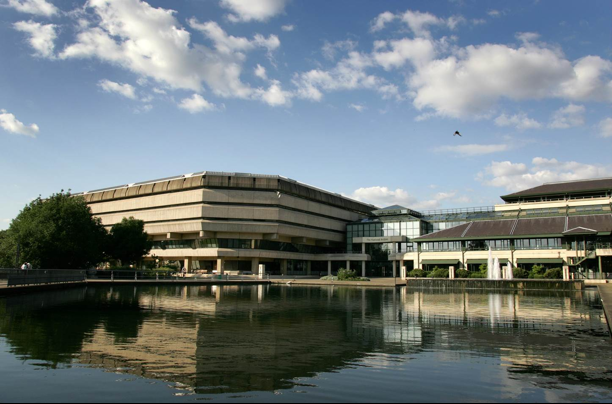
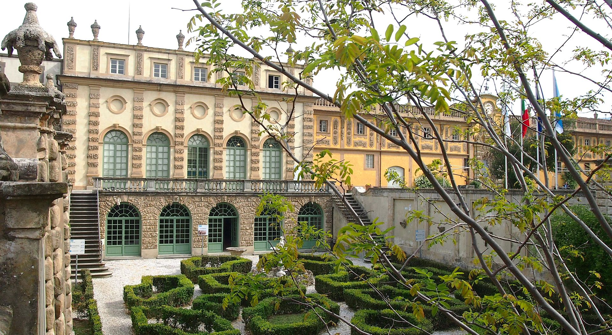
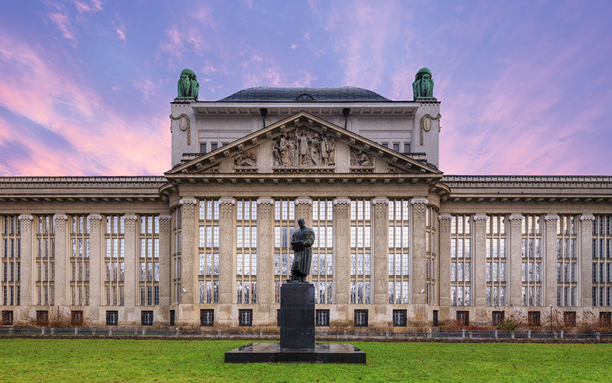
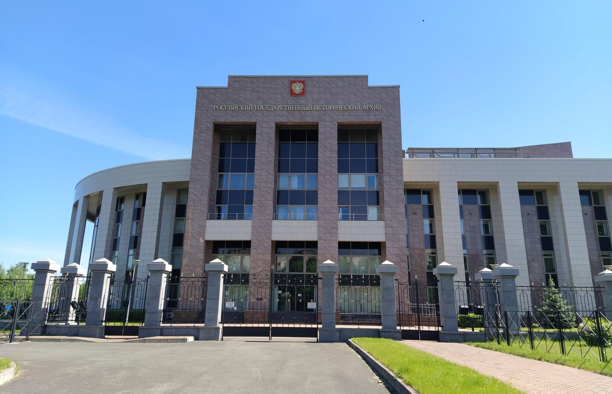
Archives are the documentary by-product of human activity retained for their long-term value. The records created in the course of the everyday lives and actions of individuals and organisations offer direct insights into past events. Like people, archives are diverse. They come in a variety of formats including text, photographs, video, sound, analogue and digital. Archives are held by individuals and institutions (both public and private) around the world, with the buildings housing them often sharing the name of 'archives', there are also online archives.
According to the Universal Declaration on Archives, archives are a unique and irreplaceable heritage passed from one generation to another. Archives are managed from creation to preserve their value and meaning. They are authoritative sources of information underpinning accountable and transparent administrative actions. They play an essential role in the development of societies by safeguarding and contributing to individual and community memory. Open access to archives enriches our knowledge of human society, promotes democracy, protects citizens' rights and enhances quality of life.
Trust
Trust is of paramount importance in determining the societal value of archives. To achieve this, they must possess the following qualities:- Authenticity - the record is genuine, i.e. it was created at the time and by the person or entity claimed in the document.
- Reliability - the trustworthiness of a document, reflecting the accuracy with which an archive represents its subject matter; however, even with highly reliable documents, information is bound to be filtered through the perspective of their author.
- Integrity - the quality of completeness, the idea that the full body of content is present to provide a coherent picture.
- Usability - the accessibility of an archive, in terms of both condition and storage location. Natural disasters, conflicts, and data corruption can all render archives useless, while state/institutional policies can also impede the practical usability of archives for citizens.
It is of paramount importance always to remember that an archive is not to be regarded as the objective truth. Records serve as evidence of the activities of individuals or organisations at a given moment in time. As a result, they present a perspective that is influenced by the worldview and experiences of the entity producing them. As users of archives, we must not only be aware of this context when interpreting records but also of how our own worldview and experience will, in turn, colour our interpretation of an archival resource.
Characteristics of archives
- Archives are only retained if they are considered to be of long-term historical value. Assessing this can be challenging, but collections must undertake the procedure since it is impossible to preserve for every single document ever produced.
- Archives are not consciously created as historical records. The value of archives stems in part from their contemporary nature and the insight they can thus give into specific historical moments.
- Archives are diverse in form. They come in an assortment of analogue and digital formats. Examples include, but are not limited to, written documents, online data, photographs, films, and audio recordings.

Donald J. Trump
The executive orders of Donald J. Trump mean that substantial archival content in the USA is at risk of being destroyed or changed, thus introducing a risk that some US archives may not be trustworthy, either now, or in the near future. It is the purpose of these pages, to act as a reliable source of information, and to provide links to other sources or archives. I have endeavored to ensure the authenticity of all the documents held on this server and archive. Meanwhile every archive linked to is checked on a regular basis, in an attempt to remove Trump bias. American archives are currently not linked to on this site.
Tocsinbang Archives
On this server I have included my own archive. Documents included are scans of documents I have in my own possession.
Working with Archives
There are a variety of reasons for using archives. First is to satisfy personal curiosity. Second might be to assist in the writing of a book or other publication. Third might be academic research when working towards an educational qualification. Personally I have used archives for all of these purposes.
First thing is to identify the archive(s) you wish to use. Are they likely to hold the kind of material you are interested in? Is it accessible online? If not, is it within reasonable traveling distance? Do you need to register to use the archive, or particular elements of it? Do they have an online catalogue? Remember that these were generally set up long before Google, and a single word search will not usually work, you may find thousands of documents.Look on the archive’s website to see if they provide research guidance and to find out how the archive is arranged. If visiting an archive, check up on their rules, they vary considerably. Many archives do not allow people to carry in containers of any kind, or to use anything other than a pencil and paper or index cards. In most cases electronic devices, including laptops and mobile phones are not permitted.
Do some research before you visit. Read some published books first for ideas, or talk to others who may have specialist knowledge, or related interests.
Check different archives and
organisations for relevant documents. You might find useful material
in a number of different places.
Citing Sources
Citing your sources is essential
in academic writing, or if writing for publication. Whenever you
quote or paraphrase a source (such as a book, article, or webpage),
you have to include a citation crediting the original author.
Failing to properly cite your sources counts as plagiarism, since
you’re presenting someone else’s ideas as if they were your own.
When do you need to cite sources?
Citations are required in all
types of academic texts and published works. Citations are needed whether you
quote or paraphrase, and whatever type of source you use. As well
as citing scholarly sources like books and journal articles, don’t
forget to include citations for any other sources you use for
ideas, examples, or evidence. That includes websites, YouTube
videos, and lectures. Citations are
needed for several reasons:
- To avoid plagiarism by indicating when you’re taking information from another source
- To give proper credit to the author of that source
- To allow the reader to consult your sources for themselves
- A citation is needed whenever you integrate a source into your writing. This usually means quoting or paraphrasing:
- To quote a source, copy the text word for word and put it inside quotation marks. If you intentionally omit words, for example the beginning or end of a long sentence, use an ellipsis which is a punctuation mark consisting of three dots (...) that indicates the intentional omission of words from a quote, a pause in speech, or a trailing thought. It acts as a visual representation of silence or missing information, widely used in both creative writing and formal writing to signify that something has been left out.
- To paraphrase a source, put
the text into your own words. It’s important that the paraphrase
is not too close to the original wording.
Style of citations:
Different academic institutions and journals have their own styles of citation, check out for their guidelines. If you are publishing independently, then you may choose your own style, however it is important to ensure that others may be able to refer to your sources, therefore you should include:
- The name(s) of authors.
- The year of publication.
- If your source is a book, then its title and the name of the publisher.
- If your source is a journal, its title and the volume number and page numbers.
- If your source is a website or other online content, then the complete URL.