WVS/WRVS/RVS
W.V.S. was made, not by the genius of the one but by the
faithfulness of the many. We started without knowing where we were
going. We do not know how far we shall have to go, or what we
shall be asked to do, but we know that nothing will be too hard..
Stella Reading
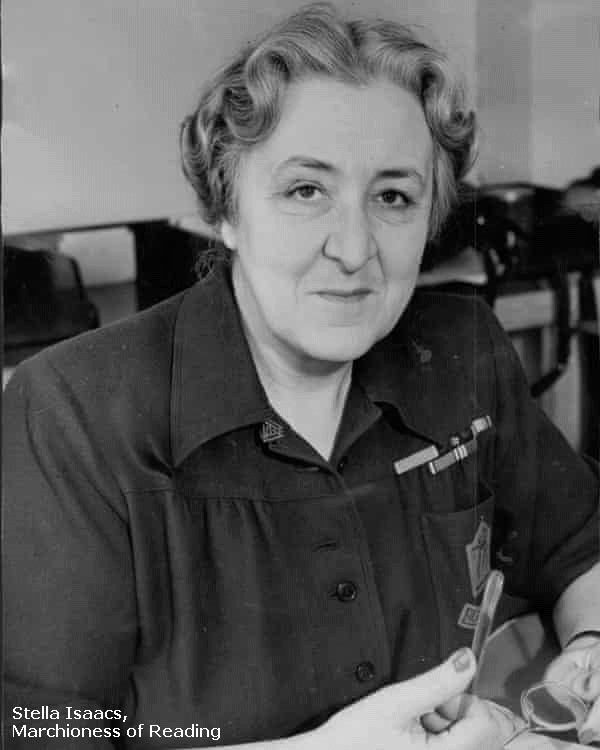
The WVS was established in 1938, as the Women's Voluntary Services for Air Raid Precautions, with the objective of getting women involved in the ARP (Air Raid Precautions) service. By the outbreak of WWII there were 300,000 women enrolled, by 1943 there were over a million. The founder was Stella Isaacs, Marchioness of Reading (also Baroness Swanborough). They were, and always have been, a totally independent organisation. Unlike most other civil defence organisations, they still remain totally operational, still serving those in need. Their name and role has changed, for example they were renamed the Women's Royal Voluntary Service (WRVS) in 1966 in honour and recognition of their outstanding service to the nation. Later men joined the organisation, and in 2013 they dropped the Women's part of their title, becoming the Royal Voluntary Service. There is a branch in Lisboa, Portugal. Today the emphasis of the RVS is on helping the elderly, although their emergency teams can still be found at the scene of major incidents, such as train crashes, floods, major fires and the like, providing emergency feeding and rest centres.
When first formed, volunteers had to purchase their own uniforms (suppliers included Harrods). Their later uniform consisted of a green dress and overcoat together with a hat or beret, working uniform consisted of a green overall. In civvies members could wear a lapel badge.
During the cold war period, from 1949 until 1968, the WVS was closely affiliated with the Civil Defence Corps, and in particular with the Welfare section. I remember many times, on Civil Defence Corps exercises, that they turned up, built a field kitchen and fed many hundreds of people with a full blown hot meal. On one of our largest exercises, they fed 500plus workers and casualties a very substantial beef stew. At this time the WVS were involved in a number of disaster relief operations, including the Bourne End rail disaster 1945, the 1953 East Coast floods, the Lewisham train crash of 1957 and the Aberfan disaster in 1966.
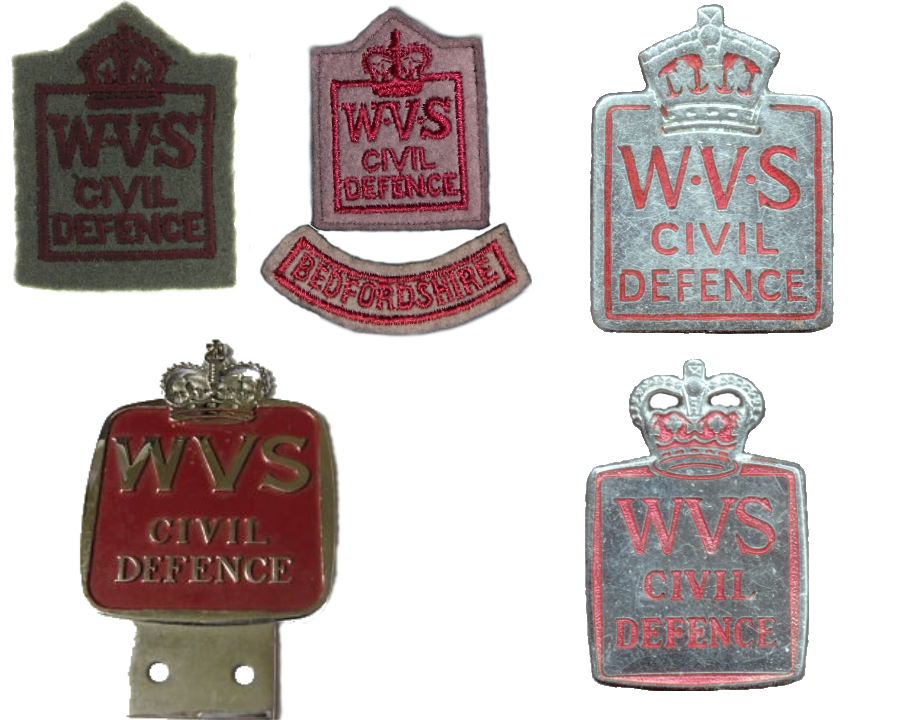
The WVS/WRVS Civil Defence Badge was worn on the left breast pocket, with the district/county badge below it. The Civil Defence Section badge was worn below the shoulder seam on both arms. Those volunteers who held appropriate first aid qualifications would also wear the Civil Defence Corps first aid badge.Whilst not members of the Civil Defence Corps, members of the WVS/WRVS worked under the Corps Welfare Officer during exercises and would have also done so in the event of war. Their key roles were in feeding and in rest centres, and in operating emergency food columns. Emergency food columns were actually the responsibility of the Ministry of Agriculture, Fisheries and Food, under the Civil Defence Regulations, but they were almost entirely staffed by WVS/WRVS volunteers.
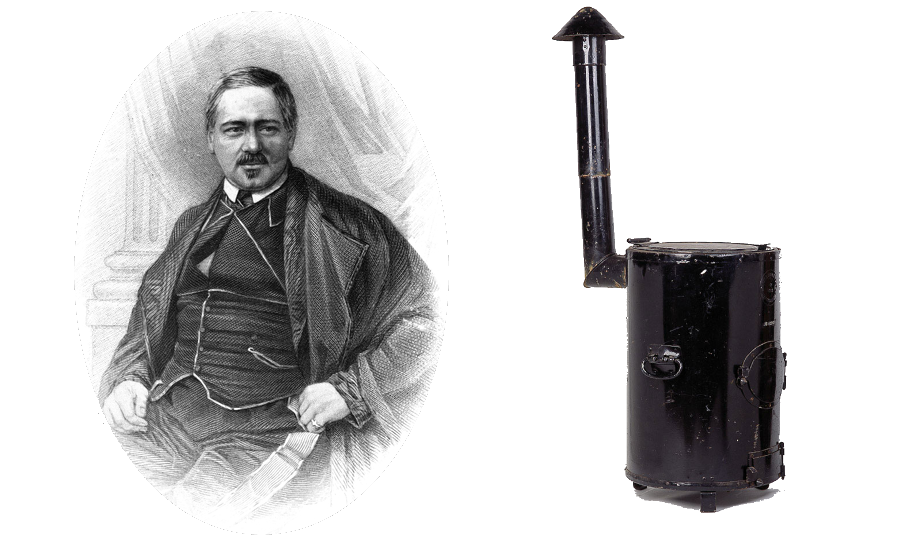
Soyer and his boiler
Alexis Benoȋt Soyer (1810-1858), was the chef de cuisine at the Reform Club in London. He has been said to be the first celebrity chef, and actually prepared Queen Victoria's wedding breakfast. At the time of the Great Irish Famine (aka the Potato Famine), Soyer set up a soup kitchen in Dublin, that fed 8,750 people a day. During the Crimean War, Soyer joined the troops at his own expense to advise the army on cooking. Later he was paid his expenses and wages equivalent to those of a Brigadier-General. He reorganized the provisioning of the army hospitals. He designed his own field stove, the Soyer Stove, later known as the Soyer Boiler, and trained and installed in every regiment a regimental cook so that soldiers would get an adequate level of nutrition. The Soyer Boiler was capable of producing a hundred portions of stew or soup.WVS/CD field oven
1 in 5
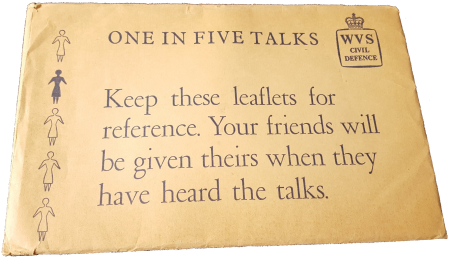
During the cold war, the WVS was famous for its One in Five talks. The objective was for one in five of women in the UK to be taught how to respond in the event of a nuclear war, The scheme was established in 1955 under the leadership of one of the founding members of the WVS, Lady Rosa Lucas-Tooth. The scheme was entirely in the hands of the WVS, with the support of the Home Office. It meant speaking to 3 million women, with the hope that they would share what the learned with others. Initially there were three talks. The first two were given by WVS speakers, and the third by a nurse or member of the1 in 5 St John Ambulance Brigade.Talk A - covered how to mitigate the effects of the H-bomb. It explained what would happen if the bomb fell and the hazards including fire, gamma radiation, fallout and blast. Audiences were informed about what to do if the hazards occurred.
Talk B - recapped the H-Bombs effects and then aimed to illustrate the dos and don'ts in the event of a nuclear attack. The form of help available from Civil Defence Corps was discussed. Finally the speaker informed the audience on how they could be independent, as other help might not be available straightaway.
Talk C - stressed the importance of taking a full Home Nursing Course in case help could not come straight away if a nuclear disaster ever occurred. In 1959 the format changed to either a single one hour or two 45 minute sessions, covering the same material as the previous talks A and B with a session C as an option. In 1968 the Civil Defence Corps was stood down and the WVS talks became the only generally available source of information to the public.
Royal Voluntary Service
In 1966 in recognition of the service WVS and its volunteers had given to the country were granted the honour of adding 'Royal' to their title by their Patron, Her Majesty the Queen. They became Women's Royal Voluntary Service. Since then Royal Voluntary Service and their services have evolved. They became an independent registered charity in 1992 and in 2004 changed their name to simply WRVS. In 2013, they became Royal Voluntary Service.