Lachrymators
When
you hear the word teargas you think, well, your eyes will burn
and that's it. But that whole feeling of your whole skin
burning, that you can't breathe, you can't inhale, you feel
suffocated - it's a very, very terrifying experience.
- Haskell
Wexler
Lachrymators cause irritation to the eyes, and hence tears. They are commonly called tear gases. Lachrymators are regarded now as riot control agents. Generally they cease to have any effect shortly after exposure ceases, although very high levels of exposure to some of the agents may cause long-term effects. The use of riot control agents as a method of warfare is prohibited by the CWC, in 2022 it was claimed Russia used them in the war with Ukraine, inititially identified as chlorine, then as chloropicrin, this was later corrected to CS.
1-Bromo-2-butanone [Bromomethylethyl ketone, 1-bromobutan-2-one, Bromomethyl ethyl ketone, Homomartonite, Bn-Stoff] - CH3COCHBrCH3
A colourless to straw-colored
liquid. Toxic by inhalation, skin contact or ingestion. May cause
burning of eyes and lachrymation (flow of tears)osure in an enclosed
area may be very harmful. Burning will produce irritating, corrosive
and/or toxic gases.
2-Chloroacetophenone [Chloroacetophenone, CN] - C6H5COCH2Cl
A white crystalline solid, dense than water and insoluble in water, with a floral odour. It is a potent eye, throat, and skin irritant. Acute (short-term) inhalation exposure of humans causes burning of the eyes with lachrymation, some degree of blurred vision, possible corneal damage, irritation and burning of the nose, throat, and skin, and burning in the chest with dyspnea. Acute dermal exposure is irritating and can result in first, second, and third degree chemical burns.
2-chlorobenzalmalononitrile [CS, o-chlorobenzylidene malononitrile] - C10H5ClN2
A white crystalline solid or
light beige powder, with an odour of pepper. Exposure causes a
burning sensation and tearing of the eyes to the extent that the
subject cannot keep their eyes open, and a burning irritation of the
mucous membranes of the nose, mouth and throat, resulting in profuse
coughing, nasal mucus discharge, disorientation, and difficulty
breathing, partially incapacitating the subject. CS gas is an
aerosol of a volatile solvent (a substance that dissolves other
active substances and that easily evaporates) and
2-chlorobenzalmalononitrile, which is a solid compound at room
temperature. CS gas is generally accepted as being a non-lethal
weapon. Banned for use in warfare pursuant to the 1925 Geneva
Protocol.
2-Methylbenzyl bromide [1-(Bromomethyl)-2-methylbenzene, alpha-Bromo-o-xylene, Xylyl bromide, T-Stoff] - C6H4CH3CH2Br
A colourless liquid in pure form
but may appear yellowish as it ages or in the impure product. It has
a pleasant aromatic smell. Causes skin irritation and serious
eye irritation. 2-Methylbenzyl bromide is flammable.
Acrolein [Papite, Propenal, Acrylaldehyde] - CH2CHCHO
A colourless liquid with a
piercing, disagreeable, acrid smell. The smell of burnt fat, as when
over cooking fried bacon or steak is caused by glycerol in the
burning fat breaking down into acrolein. Initially irritating to the
eyes and mucous membranes. Very toxic by inhalation. It dissolves in
water very easily and quickly changes to a vapour when heated. It
also burns easily. Symptoms of single or short-term exposure to
acrolein may include irritation to the eyes, skin and the mucous
membranes of the respiratory and gastrointestinal systems. It can be
corrosive. Exposure can lead to decreased pulmonary function,
pulmonary oedema (a build up of fluid in the lungs, characterised by
severe shortness of breath), and chronic respiratory disease.
Longer term exposure to acrolein may result in general respiratory
congestion and eye, nose and throat irritation. Systemic effects to
the respiratory, reproductive, neurological and haematological
systems may also result.
Benzyl bromide [Cyclite, T-Stoff, Bromotoluene] - C6H5CH2Br
A colourless to yellow liquid,
with a strong, sharp, pungent odour. Intensely irritating and
corrosive to skin, eyes, and mucous membranes. Large doses cause
central nervous system depression. Combustible, giving off
irritating or toxic fumes (or gases) in a fire. Above 79°C
explosive vapour/air mixtures may be formed. It is slightly soluble
in water and denser than water (density 1.44 g / cm3 (Aldrich)).
Corrosive to metals and tissue.
Benzyl iodide [Fraissite, alpha-iodotoluene, iodomethylbenzene, iodo-methyl-benzene) - C6H5CH2I
Colourless to yellow needle like
crystalline solid, melting at 24.5 °C. Benzyl iodide has the same
structure as the bromide, but with an iodine atom replacing the
bromine atom. Toxic by ingestion, inhalation and skin absorption.
Very irritating to skin and eyes. Insoluble in water and
denser (1.74 g / cm3) than water, hence it sinks in water. Toxic by
ingestion, inhalation and skin absorption. Very irritating to skin
and eyes. Inhalation, ingestion or contact (skin, eyes) with
vapours, dusts or substance may cause severe injury, burns or death.
Contact with molten substance may cause severe burns to skin and
eyes. Reaction with water or moist air will release toxic, corrosive
or flammable gases. Reaction with water may generate much heat that
will increase the concentration of fumes in the air. Fire will
produce irritating, corrosive and/or toxic gases. Runoff from fire
control or dilution water may be corrosive and/or toxic and cause
pollution.
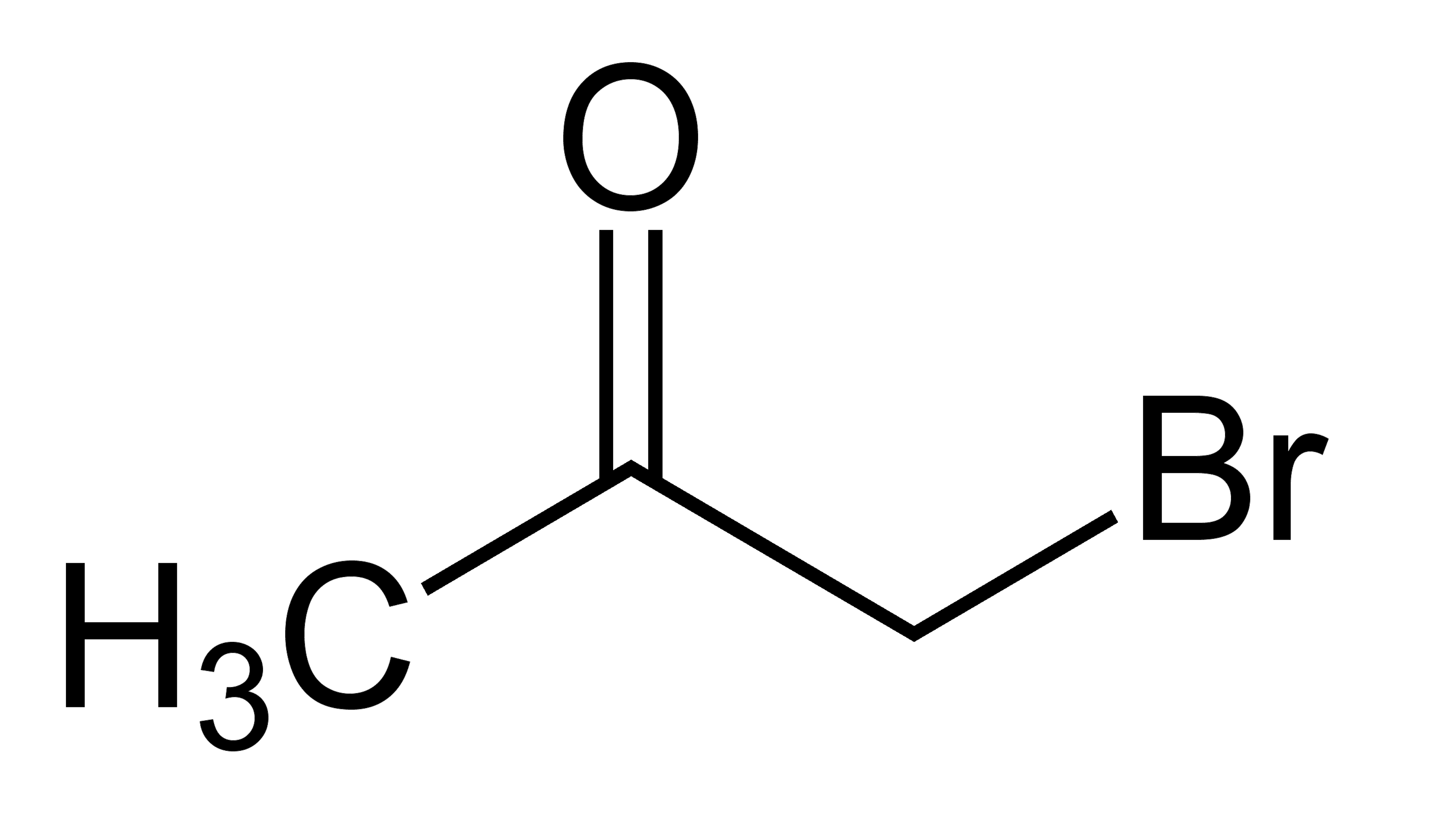
Bromoacetone [Martonite, BA, B-Stoff, 1-Bromo-2-propanone, 1-bromopropan-2-one, Monobromoacetone] - CH3COCH2Br
A clear colorless liquid turning violet on standing, even in the absence of air, and decomposing to a black resinous mass on long standing. A violent lachrymator, low concentrations are very irritating to the eyes; high concentrations or prolonged exposure at lower concentrations may have adverse health effects. Very toxic by inhalation. Contact with the liquid causes painful burns.
Bromobenzyl cyanide [Camite, CN, , Bromo(phenyl)acetonitrile] - C6H5CHBrCN
Yellowish crystalline sold that
melts to an oily liquid at room temperature. Extremely irritating to
the eyes, and can burn them. The liquid or solid in contact with the
skin can cause burns. High level exposure can cause headache,
palpitations, weakness and breathing problems possibly leading to
death. It is slightly soluble in water but readily soluble in
organic solvents. Bromobenzyl cyanide is resistant to the action of
water and oxidizers; it decomposes upon heating above 120° C and
also when exposed to the action of a number of metals, which are
thereby intensely corroded.
Chloroacetone [Chloropropanone, Tonite, A-Stoff, 1-Chloropropan-2-one, Monochloroacetone] - CH3COCH2Cl
A colourless to yellow-colored
liquid, on aging it darkens with an irritating pungent odour.
Chloroacteone has the same structure as bromoacetone, but with the
bromine atom replaced by a chlorine atom. Chloroacetone isight
sensitive, but can be stabilised with the addition of small amounts
of water and/or calcium carbonate. Slightly soluble in water and
denser than water. Vapours much heavier than air. Exposure causes
immediate, intense irritation to the eyes, nose, and skin, with
symptoms including tearing (lacrimation), stinging, nausea,
vomiting, breathing difficulties, and in high concentrations, damage
to the cornea or pulmonary oedema. It is highly toxic, flammable,
and can form explosive vapor/air mixtures above 28°C.
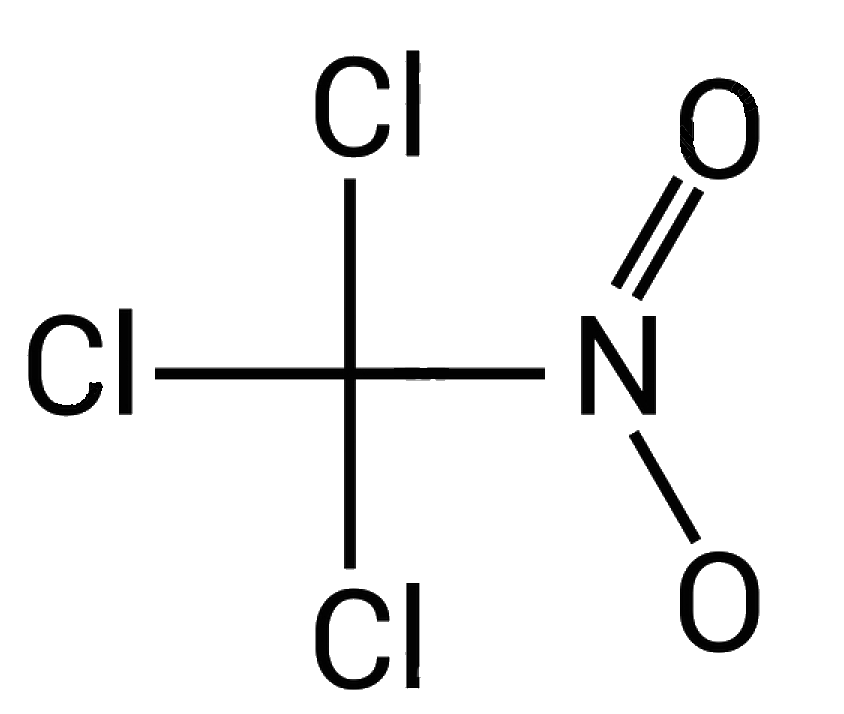
Chloropicrin [Trichloronitromethane, Nitrochloroform, Aquinite, PS, NC, Klop] - CCl3NO2
A colourless to slightly yellow
liquid with a strong, irritating odor. It is commonly used as a
pesticide and soil fumigant but can also be found in chemical
warfare agents and tear gas. Its effects on health can be quite
severe, depending on the route and level of exposure. Chloropicrin
(CCl₃NO₂) exposure can cause severe irritation to the eyes, skin,
and respiratory system, leading to symptoms such as coughing,
shortness of breath, and tearing. High concentrations may result in
more serious health effects, including lung damage, chemical burns,
and, in extreme cases, respiratory failure. It has been claimed that
Russia used chloropicrin during the current Russo-Ukranian war.
Dibenzoxazepine [CR] - C13H9NO
Yellow solid with an odour of pepper; powder is dispersed using a small explosive or dissolved in a solvent and water and sprayed. A lachrymatory agent, its effects are approximately 6 to 10 times more powerful than those of CS gas. CR causes intense skin irritation, in particular around moist areas; blepharospasm, causing temporary blindness; and coughing, gasping for breath, and panic. It is capable of causing immediate incapacitation. It is a suspected carcinogen. It is toxic, but less so than CS gas, by ingestion and exposure. However, it can be lethal in large quantities. In a poorly ventilated space, an individual may inhale a lethal dose within minutes. Death is caused by asphyxiation and pulmonary edema. The effect of CR is long-term and persistent. CR can persist on surfaces, especially porous ones, for up to 60 days.
Ethyl bromoacetate [Ethyl 2-bromacetate, Antol] - CH2BrCOOC2H5
A clear, colourless liquid with a
fruity, pungent odor. A skin, eye, and mucous membrane
irritant exposure to 8 ppm for more than 1 minute is unbearable.
Contact with liquid can cause corneal burns. A lachrymator and a
strong skin irritant.Highly toxic. Inhalation of high concentrations
may produce acute pneumonitis and pulmonary edema.
Ethyl iodoacetate [SK, ethyl 2-iodoacetate, Ethyl monoiodoacetate] - CH2ICOOC2H5
A clear, light yellow to orange
liquid that rapidly turns brown and releases iodine when in contact
with air. It is toxic, and causes severe irritation to the skin,
eyes and respiratory system. Ethyl iodoacetate has the same
structure as Ethyl boromoacetate, but with the bromine atom replaced
with an iodine atom. It is highly flammable.
Iodoacetone [1-iodopropan-2-one, Bretonite, 1-Iodoacetone, 1-Iodo-2-propanone, 1-iodopropan-2-one] - CH3COCH2I
Iodoacetone
has the same molecular structure as Bromoacetone, but with the
bromine atom replkaced by an iodine atom. Iodoacetone is a
severe irritant to the eyes, skin, and respiratory tract, causing
intense lacrimation, coughing, sneezing, and excessive mucus
production even at low airborne concentrations of 0.007 mg/L. These
effects stem from its reactivity as an alkylating agent, where the
iodine atom facilitates nucleophilic substitution with sulfhydryl
(-SH) groups in receptor proteins at sensory nerve endings,
triggering immediate inflammatory responses. Upon higher exposure or
prolonged contact, iodoacetone can lead to systemic toxicity through
alkylation of essential biomolecules, such as thiol groups in
enzymes, resulting in symptoms including nausea, abdominal cramps,
chest pain, and respiratory distress. The minimum lethal
concentration via inhalation is reported as 0.35 mg/L, potentially
causing severe pulmonary damage. Long-term risks include potential
carcinogenicity arising from its alkylating mechanism, which can
damage DNA and proteins, although specific studies on iodoacetone
are limited and primarily inferential from similar haloacetones.
Occupational exposure during synthesis heightens these concerns,
necessitating stringent controls to prevent chronic effects.
Phenylcarbylamine chloride [Phenylisocyanide chloride, Phenyl isocyanide chloride, Phenylcarbylamine chloride, Phenyl isocyanide dichloride, Phenylcarbonimidic dichloride, N-(Dichloromethylene)aniline] - C6H5CNCl2
An oily liquid with an onion-like
odour. A lung irritant with lachrymatory effects. Highly toxic by
inhalation and skin absorption. Strongly irritates skin and mucous
membranes. Density 1.265 g / cm3. Insoluble in water and soluble in
alcohol. Noncombustible.