Binary Agents
Weapons of mass destruction aren't pulled out of a black hat like a white rabbit at a magic show. They're produced in factories. There's science and technology involved. They're not produced in a hole in the ground or in a basement.
Scott Ritter, United Nations Weapons Inspector
In chemical warfare, a binary
weapon is defined as a CW agent where the agent is produced during
the flying time of the ammunition (rocket, missile, shell, or
grenade) towards the target. The claimed purpose of this kind of CW
agent is to reduce the risks in the production, storage, transport,
and even destruction of the toxic agent. This is possible because
the starting materials are relatively non-toxic precursors. For this
task to be feasible the reaction has to be controlled to avoid
overheating or explosion during the flight. Also, it should
preferably run without solvent and has to be completed, with a high
yield, in a matter of seconds. Usually the body of a binary
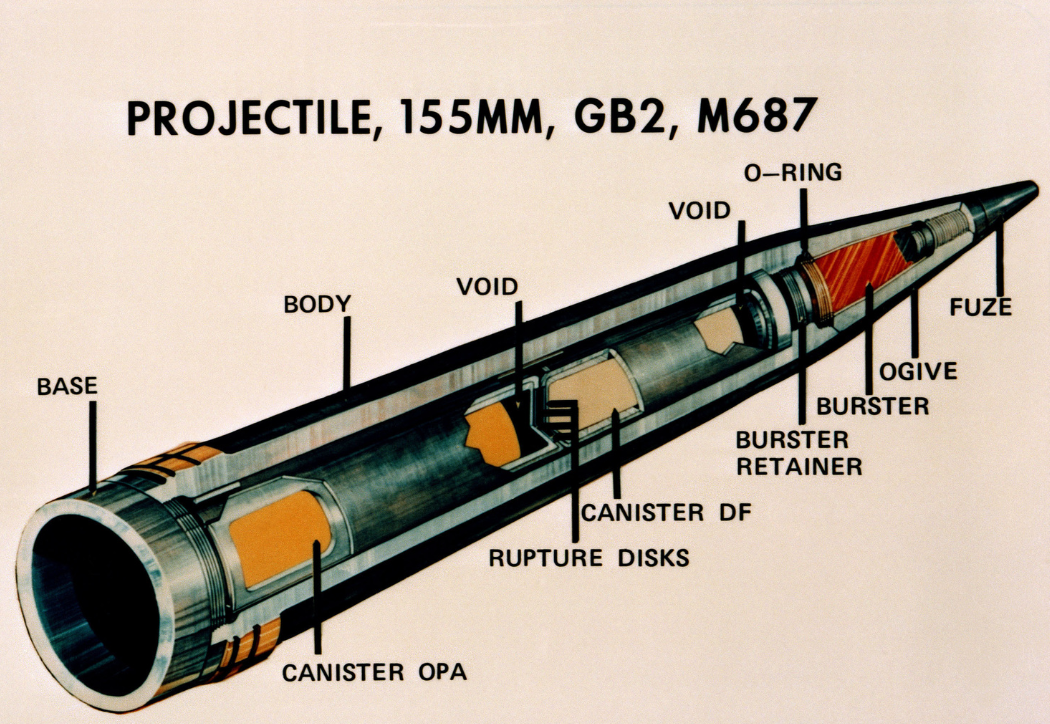
projectile contains two separate canisters, one behind the other,
each containing one starting material. The force of launching causes
the breaking of the canisters, which mixes the starting materials
and triggers the reaction to produce the chemical agent, alternative
mechanisms have been developed.
The idea of designing this kind of ammunition originates from World
War II, when military chemists developed, but never used, a binary
bomb to deliver the blood agent arsine.
The vesicant
N-(2-chloroethyl)-N-nitrosocarbamate [C5H8Cl2N2O3]
was also considered as a potential binary weapon in the 1940s, but
never fully developed. The first nerve agents developed as binary
weapons were GB-2, GD-2, and VX-2, the binary versions of sarin,
soman, and VX,
respectively. They were all developed by the USA during the Cold
War they have been called the third generation of CW
agents.
The first weapon designed to use binary agents was the American BL80
"BIGEYE" bomb. BIGEYE was an air-launched 500 pound-class canister
weapon to be delivered by various U.S. Navy and Air Force aircraft.
The interior of the weapon consisted of two separate containers of
non-lethal chemical compounds, stored separately and assembled only
immediately before flight, and then combined to create the active
chemical nerve agent VX only after release from the aircraft. It was
the storage separation of less aggressive chemical components that
ensured safe storage/handling and simpler maintenance requirements.
The bomb was a Navy design that would atomize the percutaneous nerve
agent VX over a targeted area by releasing the binary-generated
agent while gliding through the air over the target. The bomb
weighed 595 lb (270 kg) and would have generated the chemical agent
VX. It was to have a length of 7 ft 6 in (2.29 m) and a diameter of
13.25 in (337 mm). It was a glide bomb with a wingspan of 1 ft 5.25
in (43.81 cm). BIGEYE was not planned to have any internal guidance,
propulsion or autopilot systems (hence its "glide bomb"
designation). Bigeye produced VX2 as described below. It was
originally designed in the 1960s and production ended in 1990.
In the open literature little is known about agents developed in the
Soviet Union. They are thought to be five to ten times more toxic
than VX The toxicity of these binary agents does not rely
primarily on the inhibition of acetylcholinesterase,
but it is thought that it causes permanent neuropathy. Consequently,
conventional nerve agent antidotes (atropine
sulfate and pralidoxime
chloride) may not work. Reactive oximes such as potassium
2,3-butanedione monoximate may be use in detoxification.
Known binary agents include the following:
GB-2: (binary sarin, GB-2)
There are several reported
precursors for GB-2. The most frequently reported is the reaction of
methylphosphonic
difluoride (DF) [CH3F2OP] located in 1
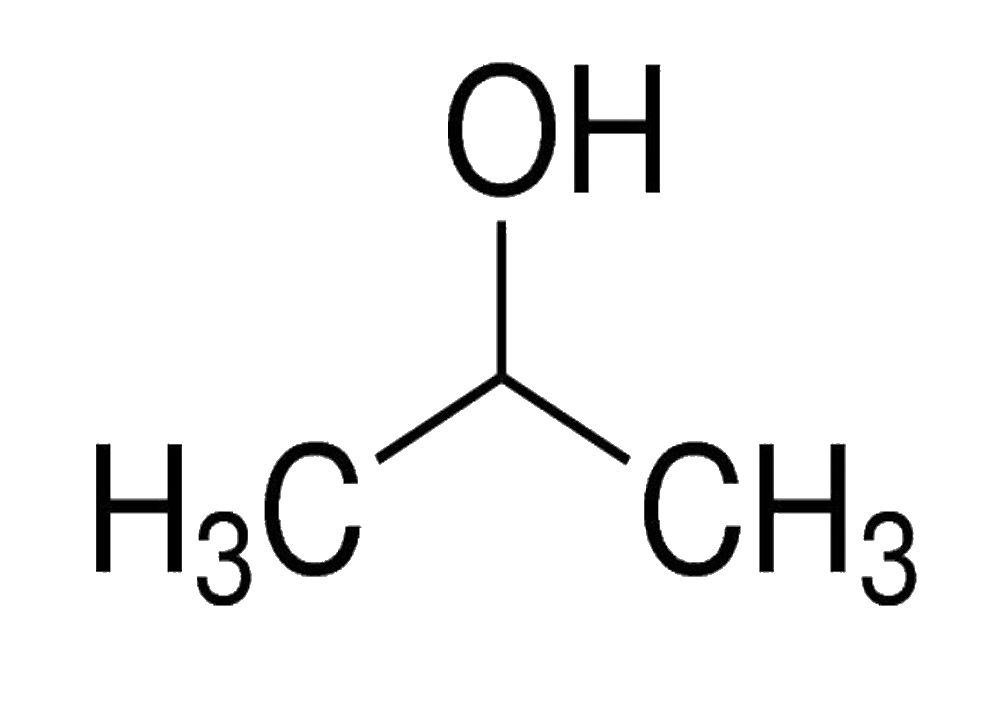
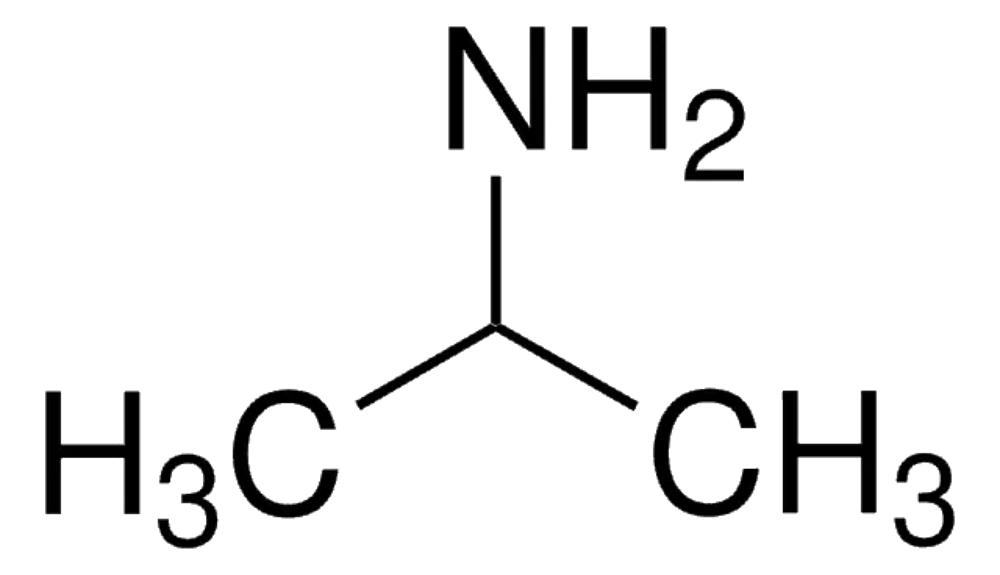
canister, while a mixture of isopropyl
alcohol [CH3CHOHCH3] and isopropylamine
[(CH3)2CHNH2]solution (OPA) is in
the second canister. The isopropyl amine binds to the hydrogen
fluoride generated during the chemical reaction. After deployment of
the weapon, the 2 canisters rupture and the chemical mixture
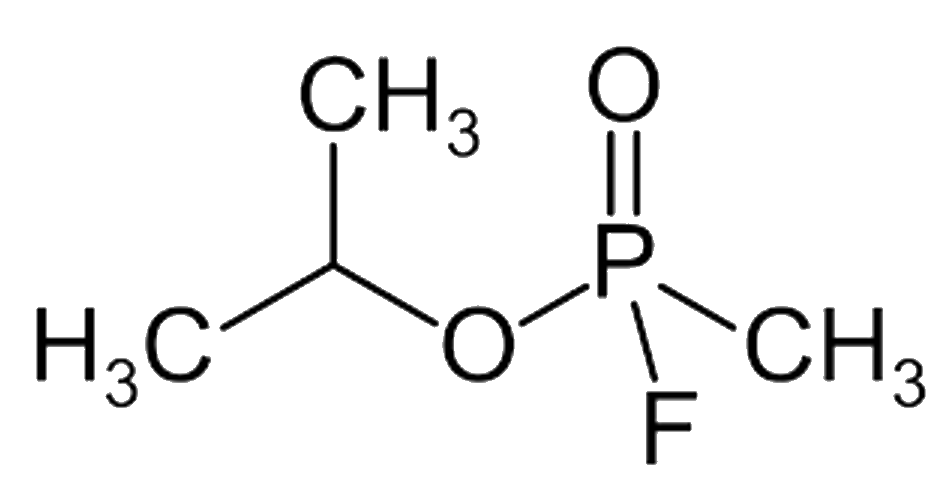
produces sarin.Binary Sarin is exactly the
same as conventional Sarin, once formed. Sarin is a potent
organophosphorus nerve agent that inhibits acetylcholinesterase
irreversibly. The subsequent build-up of acetylcholine in the
central nervous system provokes seizures and, at sufficient doses,
centrally-mediated respiratory arrest. Accumulation of ACh to
peripheral signs of intoxication and overstimulation of the
muscarinic and nicotinic receptors, which is described as
“cholinergic crisis” (i.e. diarrhea, sweating, salivation, miosis,
bronchoconstriction). Exposure to high doses of sarin can result in
tremors, seizures, and hypothermia. More seriously, build-up of ACh
at neuromuscular junctions also can cause paralysis and ultimately
peripherally-mediated respiratory arrest which can lead to death via
respiratory failure. In addition to its primary action on the
cholinergic system, sarin possesses other indirect effects. These
involve the activation of several neurotransmitters including
gamma-amino-butyric acid (GABA) and the alteration of other
signaling systems such as ion channels, cell adhesion molecules, and
inflammatory regulators. Sarin exposure is associated with symptoms
of organophosphate-induced delayed neurotoxicity (OPIDN) and
organophosphate-induced chronic neurotoxicity. The standard
treatment for sarin-like nerve agent exposure is post-exposure
injection of atropine, a muscarinic receptor antagonist, accompanied
by an oxime, an AChE reactivator, and diazepam.
GD-2 binary (binary Soman, GD2):
Methylphosphonic
difluoride (DF) [CH3F2OP] is
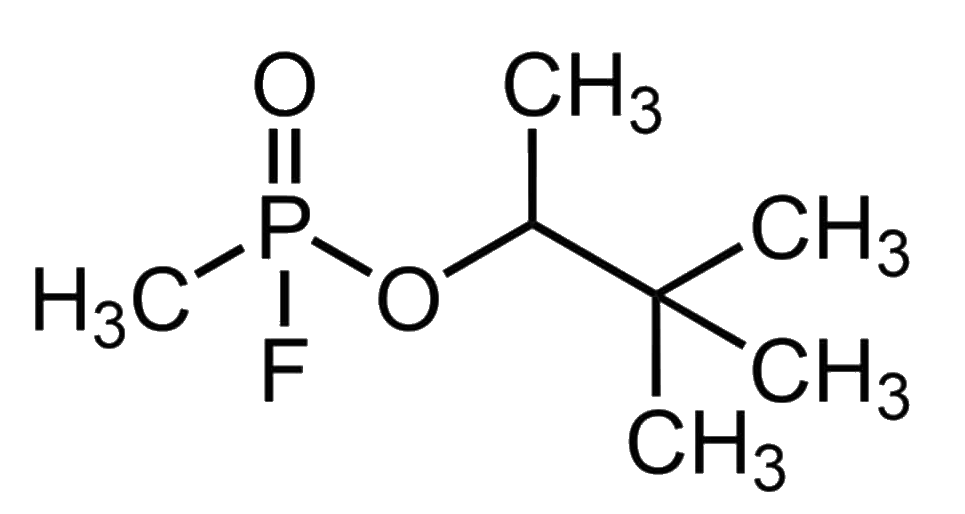
located in 1 canister, while a mixture of pinacolyl
alcohol [C6H14O] and an amine [R-NH2]
is in a second canister. After deployment of the weapon, the 2
canisters rupture and the chemical mixture produces GD. Once formed
binary Soman has all the same properties as the conventionally
manufactured Soman. Compared with other nerve agents, soman is more
volatile than VX (the strongest nerve agent) but less volatile than
sarin. Higher volatility means it is more likely to evaporate from a
liquid into a gas and spread into the environment.
Because soman is more volatile than VX, it will stay on surfaces for
a shorter period of time compared with VX. People can be exposed to
the gas even if they do not come in contact with the liquid form.
Because of its high volatility, soman is an immediate but
short-lived threat. Soman does not last a long time in the
environment.
The level of soman poisoning depends on the amount of soman, how the
person was exposed, and for how long. Symptoms will likely appear
within a few seconds after exposure to the vapor or liquid form of
soman.
People can be exposed to soman by breathing it in, swallowing, or
through skin absorption. Exposure to a low or medium amount can
cause some or all of the following symptoms within seconds to hours:
abnormally low or high blood pressure, blurred vision, chest
tightness, confusion, cough, diarrhea, drooling, excessive sweating,
drowsiness, eye pain, headache, increased urination, nausea,
vomiting, abdominal pain, rapid breathing, runny nose, low or fast
heart rate, small pinpoint pupils, muscular weakness. Even a tiny
drop of nerve agent on the skin can cause sweating and muscle
twitching where the agent touched.
Exposure to a large amount of soman in any way can cause these
additional negative health effects: convulsions, loss of
consciousness, paralysis, respiratory failure possibly leading to
death.
VX2 binary (VX2):
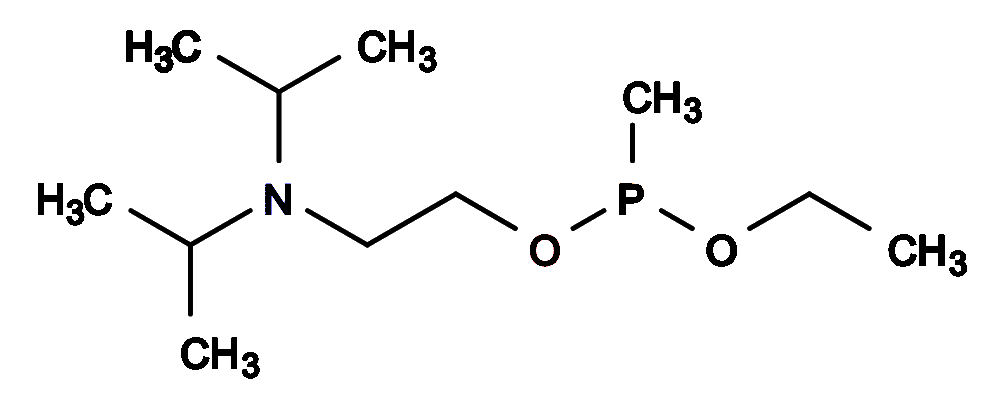
Isopropyl
aminoethylmethyl phosphonite (QL) [C11H26NO2P]
is in 1 canister. The other canister contains elemental sulfur[S].
When the weapon is fired, the canisters rupture and the chemical
mixture produces VX. Binary VX is the same as VX manufactured
conventionally. Like all nerve agents, VX stops certain enzymes from
working. When these enzymes do not work correctly, muscles are
constantly being used. As a result, people may become tired and no
longer be able to keep breathing.
VX can remain in the environment from days to months depending on the circumstances. VX is an oily liquid, amber in colour, it is tasteless odourless, it is slow to evaporate and become a vapour it evaporates as slowly as motor oil.
Signs and symptoms of exposure depend on how much a person was exposed to, how the person was exposed, and for how long. Until signs and symptoms develop, people may not know that they were exposed.
Exposure to a low or medium amount
may cause some or all the following signs and symptoms within
seconds to hours: abnormally low or high blood pressure, blurred
vision, eye pain, lachrymation, chest tightness, confusion, cough,
diarrhea, drooling, difficulty breathing, drowsiness, excessive
sweating, fast or slow heart rate, headache, increased urination,
muscle cramps, nausea, vomiting, abdominal pain, rapid breathing,
runny nose, shortness of breath, small pinpoint pupils, tremors,
muscular weakness, wheezing.
Even a small drop of VX on the skin can cause sweating and muscle
twitching where it touched the skin.
Exposure to large amount of VX in any way may result in the
following harmful health effects: loss of consciousness, cardiac
arrest, coma, convulsions, paralysis, respiratory failure, seizures,
twitching.
Because VX evaporates slowly, VX can be a short-term threat or a
long-term threat. VX can stay on surfaces and be dangerous for days
to months.
Novichok agents:
Not all novichok agents are binary, but binary versions have been made of several of them. Not much is known about these agents. The symptoms are similar to those of other nerve agents. In the open literature little is known about these agents developed in the Soviet Union. They are thought to be five to ten times more toxic than VX The toxicity of these binary agents does not rely primarily on the inhibition of acetylcholinesterase, but it is thought that it causes permanent neuropathy. Consequently, conventional nerve agent antidotes (atropine sulfate and pralidoxime chloride) may not work. Reactive oximes such as potassium 2,3-butanedione monoximate may be use in detoxification.Substance 33:
Possibly produced from the reaction between 2-methylpropyl methylphosphonocyanidate (PCN) [C5H12FO2P] and 2-(diethylamino)ethanethiol [C6H16ClNS] (DEAT)
A-232:
Possibly produced from the reaction between methyl phosphorocyanidofluoridate [CH3F2O2P] (PCF) and N,N-diethyl-2-iminopropan-1-amine [C7H16N2] (NNDA).
A-234 (3-chloro-2-methylbutyl((chlorofluoromethylene)amino)oxyphosphonofluoridate, Novichok 7)
Details unknown.
Other countries believed to have developed binary agents include Syria, Iraq and North and South Korea.